Table of Contents
Turkey: Top Court Upholds Rights Defender’s Life Term Conviction of Osman Kavala and Four Others Needs Urgent International Response
An Unfair Political Show Trial
A group of nine non-governmental organizations, including Human Rights Watch, has criticized the conviction and life sentence of rights defender and businessman Osman Kavala and four codefendants in connection with mass protests that took place a decade ago in Turkey. The group asserts that the trial has been unfair and essentially a political show trial from the beginning. They argue that the five individuals have been punished for exercising their legitimate rights to freedom of expression, association, and peaceful assembly.
The Court of Cassation, Turkey‘s top appeals court, recently upheld the convictions despite the European Court of Human Rights ruling that there was no basis for Kavala’s detention or trial and ordering his immediate release. This decision by the Court of Cassation not only demonstrates the deep injustice of the case but also highlights how far Turkey has deviated from the rule of law. Helen Duffy of the Turkey Human Rights Litigation Support Project has stated that the trial not only violated the rights of Kavala and his co-defendants but also showcased how Turkey‘s justice system has become a tool of political repression.
The Question of Judicial Independence
Despite President Recep Tayyip Erdogan and Turkish government officials repeatedly claiming that Turkish courts are independent, the trial of Kavala and his co-defendants unveils the falsehood of these claims. It demonstrates how, in cases of interest to the president, prosecutors and courts blatantly do his bidding. This raises serious concerns about the erosion of judicial independence in Turkey and the politicization of the justice system.
Kavala was sentenced to life in prison without parole based on false claims that he organized and financed the 2013 Istanbul Gezi Park protests against a government urban development project. Four co-defendants received 18-year sentences for allegedly aiding Kavala, while the court quashed the 18-year sentences of two other co-defendants and ordered their release pending retrial. The trial cynically cast the Gezi Park protests as the outcome of a grand conspiracy by Kavala, disregarding all evidence of spontaneous mass protests in which the majority of participants committed no violence and peacefully exercised their rights to freedom of expression and assembly.
Legal Failings and International Obligations
The Court of Cassation’s verdict simply reiterates the allegations made by the prosecution in the February 2019 indictment, disregarding the European Court of Human Rights’ ruling that the indictment offered insufficient evidence to justify Kavala’s detention, prosecution, or conviction. The Court of Cassation does not address the repeated findings against Turkey in this case, rebuking the European Court of Human Rights, the Council of Europe, and Turkey‘s human rights obligations.
Turkey‘s European and international allies must urgently respond to this ongoing injustice. They should prioritize this case as a matter of human rights in their relations with Turkey, pushing for the swift and full implementation of the European Court’s judgments, which include the immediate release of the defendants. These allies should firmly condemn the abuse of criminal law in politically motivated cases against activists, human rights defenders, journalists, and others. Strong efforts are needed to ensure that Turkey upholds its human rights obligations and rule of law principles, which are currently being disregarded with impunity.
The Court of Cassation’s disregard for the European Court’s judgment ordering Kavala’s release not only undermines the rule of law but also raises questions about Turkey‘s constitutional obligation to adhere to binding decisions of the European Court, which take precedence over rulings in Turkey‘s domestic courts.
Flaws in the Court’s Reasoning
The Court of Cassation’s decision relies on a chronology of events from the indictments without demonstrating any causality between lawful activities and the alleged crimes. The decision mentions protests and civil disobedience movements in other countries without showing their relevance to the case. It names civil society organizations, including the Open Society Foundations, without providing credible evidence of their alleged involvement in the Gezi Park protests.
The court decision endorses a conspiracy theory from the original indictment, invoking anti-Semitic tropes, that Soros’s organizations aimed to overthrow governments by encouraging uprisings. It fails to provide substantial evidence to support this claim. The decision also allows illegally obtained wiretapped conversations as admissible evidence, which do not reveal any criminal activity but rather demonstrate that the defendants were lawfully engaged in civil society organizations and nonviolent activism.
Furthermore, the court ignored the parliamentary immunity from prosecution for one of the defendants, despite contradictory judgments from the Constitutional Court in similar cases. This raises further concerns about the consistent application of the rule of law in Turkey.
International Response Required
Given the serious flaws in the trial and the Court of Cassation’s decision, Turkey‘s European and international allies must take immediate action. They should treat this case as a priority human rights matter in their relations with Turkey, exerting pressure for the swift and full implementation of the European Court’s judgments, including the immediate release of the defendants. They must firmly condemn the abuse of criminal law in politically motivated cases and demand that Turkey upholds its human rights obligations and rule of law principles.
It is crucial that Turkey‘s European and international allies hold the Turkish government accountable for its actions and ensure that justice is served. The international community cannot turn a blind eye to the erosion of democratic values and the violation of human rights in Turkey. By taking a strong stance, these allies can send a clear message that they will not tolerate the suppression of civil liberties and the erosion of judicial independence.
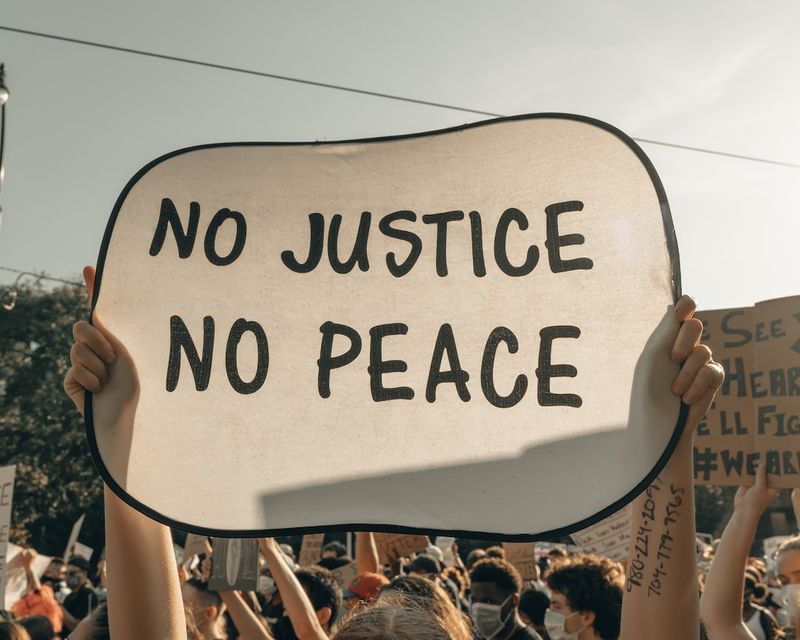
<< photo by Clay Banks >>
The image is for illustrative purposes only and does not depict the actual situation.
You might want to read !
- An Ode to Osman Kavala: Council of Europe Prize Shines Light on a Lingering Injustice
- Detaining Relatives of Exiled Activists: Tajikistan’s Crackdown on Dissent
- The Rising Tide of Xenophobia: Polish Government’s Pre-Election Anti-Migrant Stand
- Ending Cycles of Impunity: Positive Votes on Sudan and Russia Key for UN Human Rights Council
- Frontex’s Controversial Libyan Cooperation: Shedding Light in Court
- Saudi Arabia’s Dark Connection: The Deception and Exploitation of Migrant Workers in Amazon Warehouses
- Inadequate Justice: Life Sentence for Uyghur Scholar Highlights Worsening Rights Situation in China
- From Life Sentences to Life of Giving: The Inspiring Transformation of Californians
- Russian Court Upholds Harsh Sentence Against Ukrainian Human Rights Defender Maksym Butkevych