Table of Contents
Alarming Rise in Executions in Saudi Arabia Raises Serious Human Rights Concerns
Introduction
The recent news that Saudi Arabia has already executed 100 people this year has caught the attention of the international community and human rights organizations. Amnesty International’s Middle East and North Africa Director, Heba Morayef, rightly points out that this surge in executions exposes Saudi Arabia’s chilling disregard for the right to life. It is deeply concerning to see a country that claims to uphold human rights engaging in such relentless killing sprees.
Executions: A Violation of International Human Rights Standards
Saudi Arabia has long held the unfortunate distinction of being one of the world’s top executioners. Amnesty International has documented numerous cases where people have been sentenced to death for offenses ranging from posting tweets to drug-related crimes. Regrettably, these sentences have followed grossly unfair trials that fall far short of international human rights standards. It is worth noting that drug-related offenses, for which several individuals have been executed, do not fall under the category of ‘most serious crimes’ prohibited under international law.
In August alone, Saudi Arabia executed an average of four people per week, including a Pakistani man executed for drug smuggling. This demonstrates a sharp escalation in the use of the death penalty, particularly for offenses that do not warrant the most extreme punishment. The Saudi authorities’ disregard for international law and human rights standards is deeply troubling and raises significant concerns about the lives of young men on death row who were under 18 at the time of their crimes.
A Disturbing Trend: Rising Numbers and An Opaque Reporting System
The Saudi Press Agency (SPA), which regularly reports on executions, confirmed the 100th execution carried out this year. However, it is crucial to note that the actual number of executions may be higher due to SPA’s under-reporting. In 2022, Saudi Arabia executed 196 people, marking the highest number of executions recorded by Amnesty International in the last three decades. This figure is three times higher than the previous year and at least seven times higher than in 2020. The alarming rise in executions in Saudi Arabia points to a concerning trend that runs counter to global efforts to abolish the use of capital punishment.
Moreover, Saudi authorities lifted a moratorium on executing individuals for drug-related offenses in November 2022. This move contrasts sharply with international law, which prohibits the death penalty for such crimes. The Saudi Human Rights Commission claimed that the moratorium had been in place since January 2020, but with the resumption of drug-related executions, it is clear that the authorities are willing to prioritize their punitive agenda over international legal standards.
Taking Lives for Political Reasons
The case of Mohammad al-Ghamdi, who was sentenced to death solely for his critical tweets, exemplifies the Saudi authorities’ readiness to silence dissent even through capital punishment. In July 2023, Saudi Arabia’s Specialized Criminal Court issued the death sentence against him, a flagrant act of reprisal against his political views. Such alarming examples of silencing dissent raise serious questions about the state of freedom of expression in Saudi Arabia and the abuse of the death penalty for political purposes.
Amnesty International’s Stance and the Global Context
Amnesty International has consistently opposed the death penalty in all cases without exception. Regardless of the nature of the crime, the guilt or innocence of the individual, or the method of execution, the organization firmly believes in the sanctity of life. It is distressing to witness Saudi Arabia’s persistent use of the death penalty, even for offenses that do not meet the criteria established by international law.
As of today, 112 countries have abolished the death penalty for all crimes, and more than two-thirds of countries are abolitionist in law or practice. The global trend towards abolition sends a clear message that capital punishment is an outdated and ineffective measure that does not align with modern principles of justice and human rights.
Editorial: The Need for International Pressure
A Call for Accountability
The alarming rise in executions in Saudi Arabia demands immediate action and international pressure. The international community, particularly influential nations and organizations, must hold Saudi Arabia accountable for its flagrant violations of human rights. Dialogue and engagement are essential in encouraging Saudi Arabia to adhere to international human rights standards.
A Renewed Commitment to Human Rights
Saudi Arabia must demonstrate a genuine commitment to upholding human rights, which includes an end to the use of the death penalty for offenses that do not meet the threshold of ‘most serious crimes.’ The Saudi government should impose a moratorium on all executions and initiate legal reforms to bring the country’s justice system in line with international standards. Additionally, access to fair trials and proper legal representation should be guaranteed for all individuals on death row.
Global Solidarity
The countries and organizations that champion human rights, particularly those with strong diplomatic ties to Saudi Arabia, should use their influence to encourage reform. Diplomatic pressure, along with public condemnation, can be effective tools in promoting change. Furthermore, neighboring countries and regional bodies should play a proactive role in urging Saudi Arabia to reform its approach to capital punishment.
Conclusion
Saudi Arabia’s alarming rise in executions, disregard for human rights standards, and punishment of political dissent through the death penalty are deeply troubling. The international community must not turn a blind eye to these egregious violations. It is imperative to exert pressure and demand accountability from the Saudi government to bring an end to these human rights abuses. The time has come for Saudi Arabia to rethink its use of the death penalty and embark on a path towards meaningful reform that upholds the right to life for all.
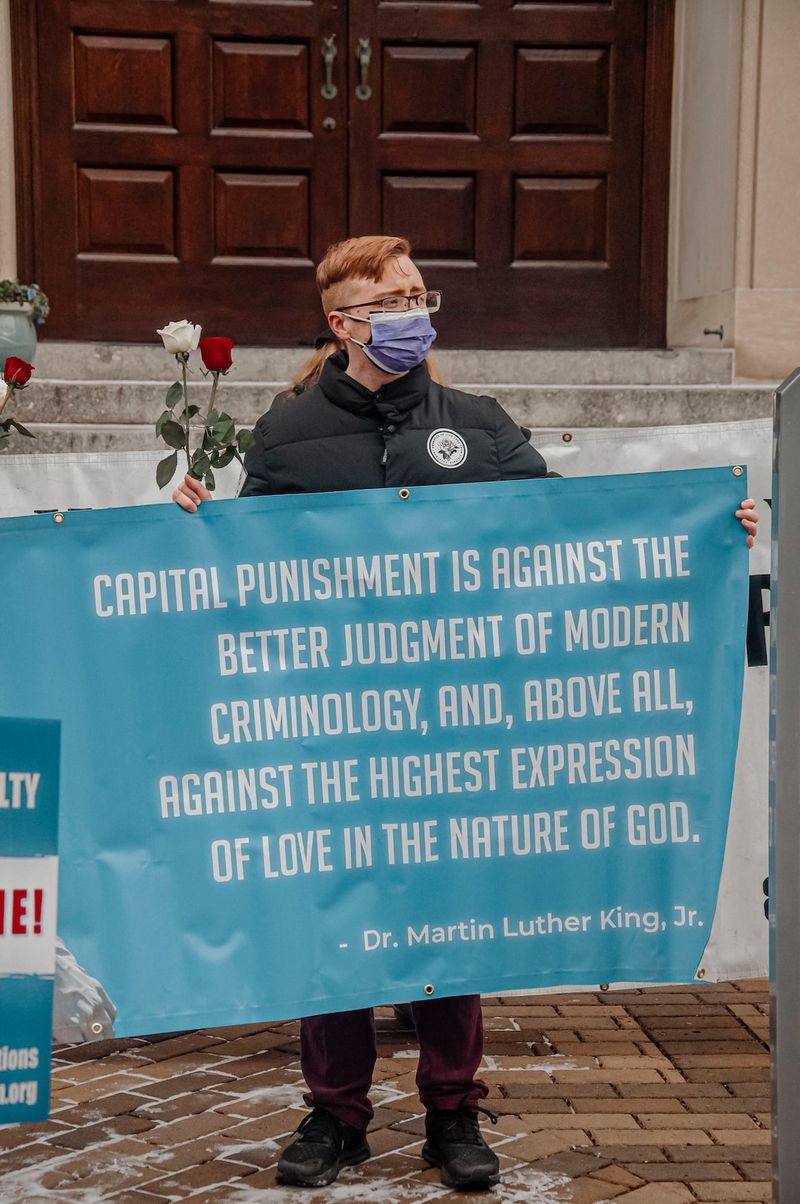
<< photo by Maria Oswalt >>
The image is for illustrative purposes only and does not depict the actual situation.
You might want to read !
- Saudi Arabia: The Urgent Need to Overturn the Unjust Conviction and Harsh Sentencing of Social Media Activist
- Is Saudi Arabia’s Use of the Death Penalty for Tweets a Justifiable Response to Cyber Dissent?
- The Deadly Toll: Unraveling the Mass Killings of Migrants at Saudi Arabia’s Yemen Border
- In the Shadow of the Coup: Chile’s Imperative Journey Towards Historical Reconciliation
- Bridging Freedom and Justice: The Urgent Call to Release Prominent Scholar Gubad Ibadoghlu
- War Crimes and Crimes Against Humanity: Unveiling Eritrea’s Actions in Ethiopia
- The changing tide: Mexico’s 12th state decriminalizes abortion
- Kosovo’s Failures: A Systemic Neglect of Domestic Violence Victims
- Burundi: Persistent Demands for Journalist’s Release, One Year Later
- Free Speech Under Threat: The Troubling Situation in Chad
- Zimbabwe Elections: Challenged by Repression and Threats to Connectivity.
- Taliban’s Gender Crimes in Afghanistan: A Violation of Humanity
- An Uphill Battle: Russia’s Veto Threatens Human Rights in Mali
- “Australian Prime Minister Urged to Address Human Rights Crisis in the Philippines”